Miter Saw vs Circular Saw: Which Saw Should You Buy First?
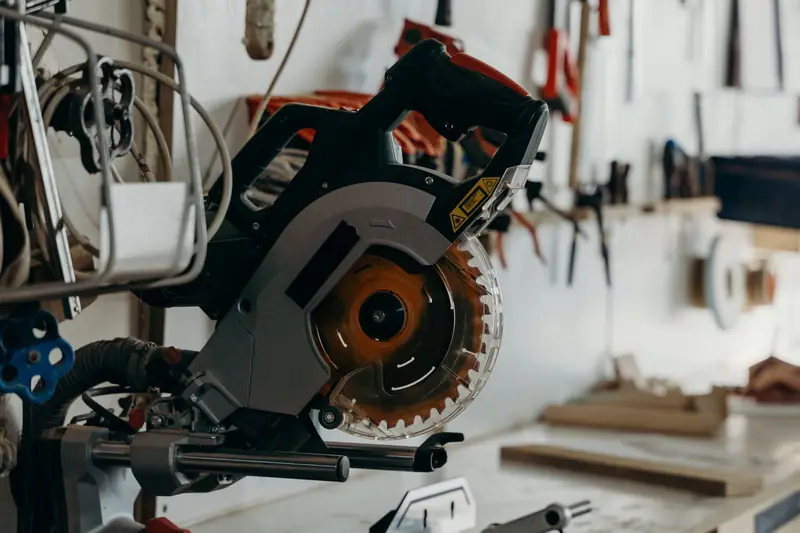
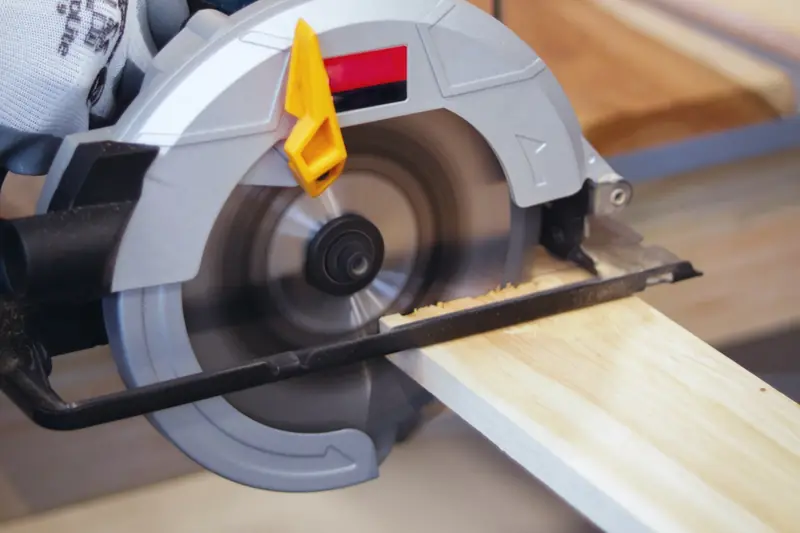
A miter saw drops a blade onto a board held against a fence, which makes repeatable crosscuts and angles. A circular saw carries the blade across the work, which makes long cuts in boards and sheets. The right first saw depends on what you build.
Miter saw: the better choice if…
- You install trim, baseboard or crown molding.
- You make many identical crosscuts, as in framing or shelves.
- You have a bench or stand where a saw can stay.
Circular saw: the better choice if…
- You cut plywood, decking or long boards.
- You work in different places and need a portable saw.
- You have limited space and want one saw for most cuts.
Jump to section
At a glance
| Point | Miter saw | Circular saw |
|---|---|---|
| Cut types | Repeatable crosscuts and angles | Rips and sheet goods |
| Accuracy | Fixed fence, repeatable angles | Depends on your guide |
| Portability | Heavier, set on a bench | Light, carry anywhere |
| Space needed | A bench or stand | A clear work surface |
| Safety set-up | Fence holds the board; clamp it | Support work, clamp, use guide |
| Cost | Usually higher | Usually lower |
Cut types
A miter saw is built for crosscuts and angled cuts: trim, baseboard, shelves and framing members cut to the same length. A circular saw handles long straight cuts, such as ripping a board along its length or breaking down sheets of plywood, which a miter saw cannot do.
Accuracy
A miter saw has a fence and preset angle stops, so the same cut repeats without marking each piece. A circular saw is only as accurate as your line and your guide. When you rip a board, always use a rip fence or a straight-edge guide (Bosch manual).
Portability
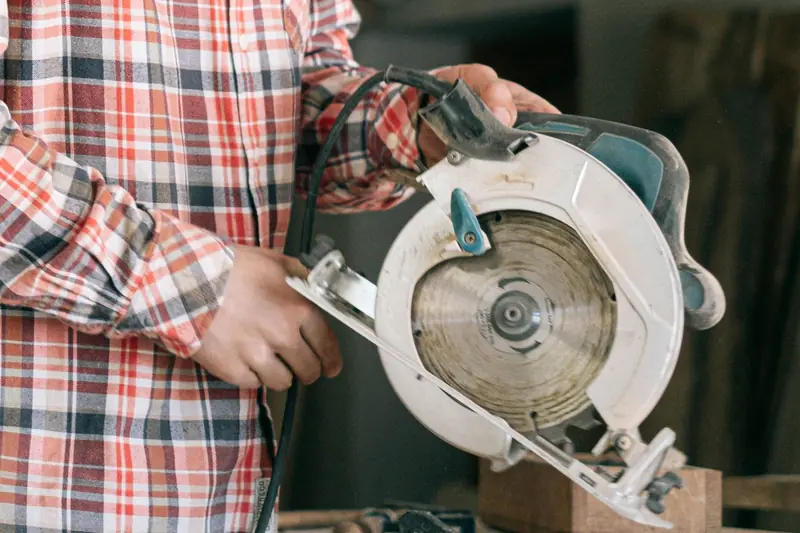
A circular saw is light enough to carry up a ladder or across a yard. A miter saw is heavier and works best on a bench or a stand. Cordless models of both free you from a cord, but they need a battery platform. See our circular saw and miter saw pages.
Space needed
A miter saw needs a spot to stay, plus room on both sides for long boards. A circular saw needs only a clear area to support the work. If you have a small garage, a circular saw and a good workbench cover most jobs.
Safety set-up
Both saws need guards that work. OSHA says safety guards must never be removed while a tool is being used, and requires the lower guard of a portable circular saw to return automatically (OSHA 3080). For a circular saw, never hold the workpiece in your hands or across your leg (Bosch manual). Clamp the work for either saw, and follow your manual.
Cost
Miter saws tend to cost more than circular saws. Prices change often, so compare the current prices on Amazon on the day you buy. Whichever you pick, remember dust control: a shop vac helps.
Which should you buy?
If your projects are trim, shelves and framing with repeated cuts, buy a miter saw. If you cut sheet goods, decking and long boards, or work in several places, buy a circular saw and read how to use it safely.
Alternatives
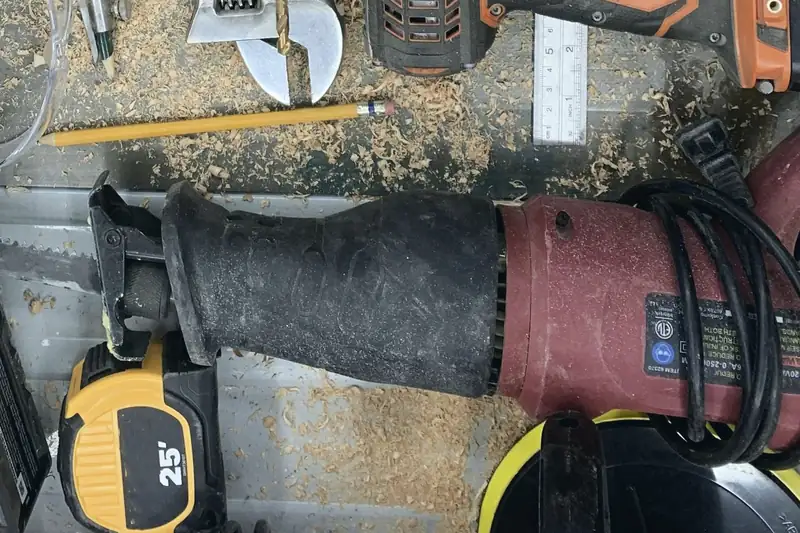
If you mostly demolish or prune, a reciprocating saw may be the better first saw.
FAQ
Can a circular saw replace a miter saw?
For many cuts, yes, with a guide and careful marking, but a miter saw repeats angled cuts more easily.
Which saw is safer for beginners?
Both need working guards and a clamped workpiece, and your saw's own manual comes first. See power tool safety basics for the rules that apply to every power tool.
Do I need hearing protection?
Power tools are around 85-90 dBA, and NIOSH advises hearing protection in noisy areas (NIOSH).
Related
-
Buying guide
Best Miter Saws for Beginners and Home Projects
Blade size, sliding or fixed, bevel and dust port, side by side.
-
Buying guide
Best Cordless Circular Saws
Blade size, cut depth, brake and weight, plus the safety checks.
-
-
Buying guide
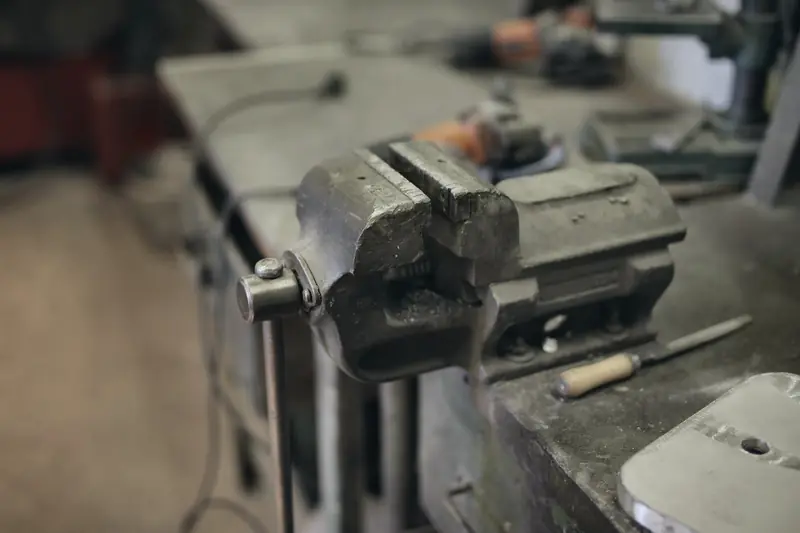
Best Workbenches for Garage and DIY
Load capacity, top material, height and storage, compared.
-
Guide
How to Use a Circular Saw Safely: A Beginner Guide
Guard, blade depth, support, kickback and grip, step by step.
-


Get the Before-You-Cut Safety Checklist
A printable 8-point check to run before you cut, drill or charge: guards, blade depth, clamping, protection and batteries. Free, and sized for the shop wall.